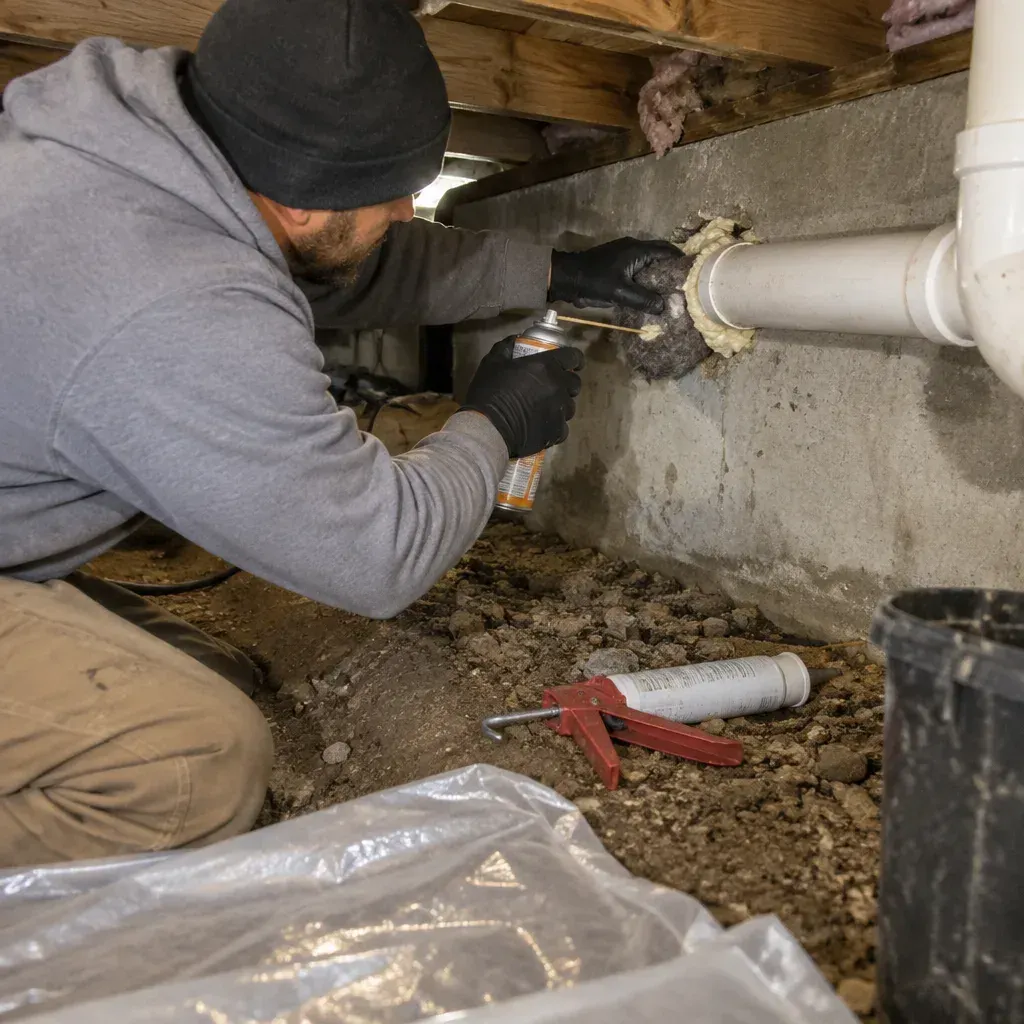
Steel Wool for South Bend Entry Gaps
A seasonal order for checking small gaps, choosing steel wool, and knowing when conditions call for another material.
Steel wool can discourage gnawing when fitted into a small, dry, sheltered gap, but it is usually a temporary measure. Moisture can cause rust, exposure can loosen it, and heat or unsafe access are reasons to stop and seek another repair.
Start With a Seasonal Gap Check
Before winter weather sets in, start with a safe visual check from a place you can reach without climbing or disturbing contaminated material. South Bend gets substantial winter snowfall, so note openings before snow and ice make them harder to see or access. Look for signs of rodent activity and mark where you found them; those clues help connect a possible route to a gap. The rest of the check is about whether steel wool suits that location, what weather may do to it, and when to stop and ask for help.
Steel wool is a bundle of thin metal fibers. Packed into a small gap, it can make the route less inviting to gnaw through, but it does not remove rodents already inside or close every path into a house. In South Bend, a seasonal check around a ranch or split-level should also note whether activity appears to continue after a suspected opening is blocked. If signs remain, the material alone has not resolved the problem; an inspection can help determine what else needs attention.
Next, consider the gap itself and its surroundings. Steel wool for mice is most useful in a small opening where the fibers can stay in place and remain dry. A sheltered spot in a house near Battell Park may suit a temporary plug better than an exposed location that gets wind, rain, or repeated contact. Record the opening’s size, position, and exposure before choosing a material. If reaching or assessing it would be unsafe, leave it alone and ask an independent local professional.
Choose Small, Suitable Openings
Once you have identified a suitable location, treat steel wool rodent control as one limited part of exclusion. The fibers can discourage gnawing, but they do not catch rodents, and an unaddressed access route may still allow entry. South Bend homes can have different layouts, from subdivision houses to older or multi-level homes, so a material that fits one sheltered gap may not suit another. The choice should follow what you observed at that opening, rather than a general assumption that every gap needs the same filler.
A snug piece can serve as a short-term barrier while you decide on a durable repair, provided it is in a dry, protected spot and away from heat. That temporary role matters during a seasonal check: you can note whether the material stays put and whether signs of activity persist nearby. Around Central Park, as elsewhere in the area, the key question is what the conditions at the specific house allow. Steel wool is not a finished repair when the opening needs a more durable closure.
Do not force the fibers into a gap that is crumbling, irregular, or too large for them to stay seated. A poor fit can leave space around the material, and movement may expose the route again. If you cannot tell whether the edge will hold or the opening needs a different repair, stop rather than packing in more material. The same caution applies where access is awkward: a clear view from a safe position is useful, but reaching behind equipment or into an unsafe area is not necessary for this check.
Check Dampness and Nearby Heat
As winter conditions continue, revisit only places you can inspect safely. Ordinary steel wool can rust if it remains wet; corrosion can weaken the barrier and mark nearby surfaces. Snowmelt, rain, or damp conditions around a South Bend home can therefore change whether a temporary plug remains useful. If the fibers look wet, loose, or corroded, do not assume the gap is still blocked. Note the change and consider a material suited to the exposure before relying on that location as sealed.
After a thaw or a period of wet weather, check whether the material has shifted or stayed damp, without pulling apart a contaminated area. Near Baugo Creek, for example, a home's immediate conditions still matter more than the name of the surrounding area: inspect the actual spot for moisture and exposure. Steel wool is a poor choice where weather can reach it repeatedly or where contact is likely to dislodge it. If the opening cannot stay dry and stable, ask a professional about a more appropriate repair.
Secure the Plug and Recheck
Before using steel wool, check for nearby heat sources and stop if the space is close to a hot surface or equipment. Metal fibers can conduct heat, so surrounding materials and the location itself matter; do not pack them into a spot where heat could create a hazard. South Bend homeowners should leave an uncertain or hard-to-reach location for an independent local professional to assess. A seasonal inspection is useful only when you can make it without creating a new safety problem.
For a small, dry opening that is suitable for the material, a compatible durable sealant or another appropriate material may help secure the fibers as part of a lasting repair. Check that the products can be used together and follow their directions; steel wool by itself may shift or deteriorate with exposure. After the seasonal repair, note whether activity signs continue and arrange follow-up checks according to the service plan if a provider is involved. That helps show whether the barrier needs attention or another step is needed.
Before You Use Steel Wool
- Before winter, note signs of activity and mark suspected gaps from a safe, accessible position.
- Check whether the chosen spot stays dry and protected from weather, movement, and nearby heat.
- After wet or thawing conditions, look for rust or shifting; do not rely on a loose or damp plug.
- Before cold weather, note whether the gap is indoors or exposed outside; sheltered locations are better candidates for a steel wool plug.
- Look for dampness or nearby heat before fitting the material; stop if conditions could rust it or make it unsafe to leave in place.
- Plan how the plug will be retained and finished; steel wool can discourage gnawing, but it may need a compatible lasting material to stay secure.
Service Questions
When should I check steel wool plugs before South Bend winter?
It can help discourage gnawing when the fibers are packed into a small, sheltered gap and remain firmly in place. That does not address rodents already inside, and it does not show whether other access routes remain open. If signs continue after you block a suspected gap, have the situation assessed rather than relying on the material alone.
Can steel wool serve as a temporary mouse gap plug?
Choose a small opening that is dry, protected from weather, away from heat, and reachable without an unsafe climb or disturbance. Steel wool may serve as a temporary measure while a durable repair is planned. If the gap is unstable, exposed, or difficult to assess, ask an independent local professional what material fits the conditions.
How do I know if an opening suits steel wool?
Yes. When ordinary steel wool stays wet, it can corrode, lose strength, and leave stains on nearby surfaces. Check it after wet or thawing conditions; a damp or shifted piece should not be treated as a dependable closure. A location that stays exposed may need a different repair material.
Ask About This Opening
Show the pros we connect you with the opening’s location and condition so they can discuss whether steel wool suits the repair.
Call (574) 891-1078