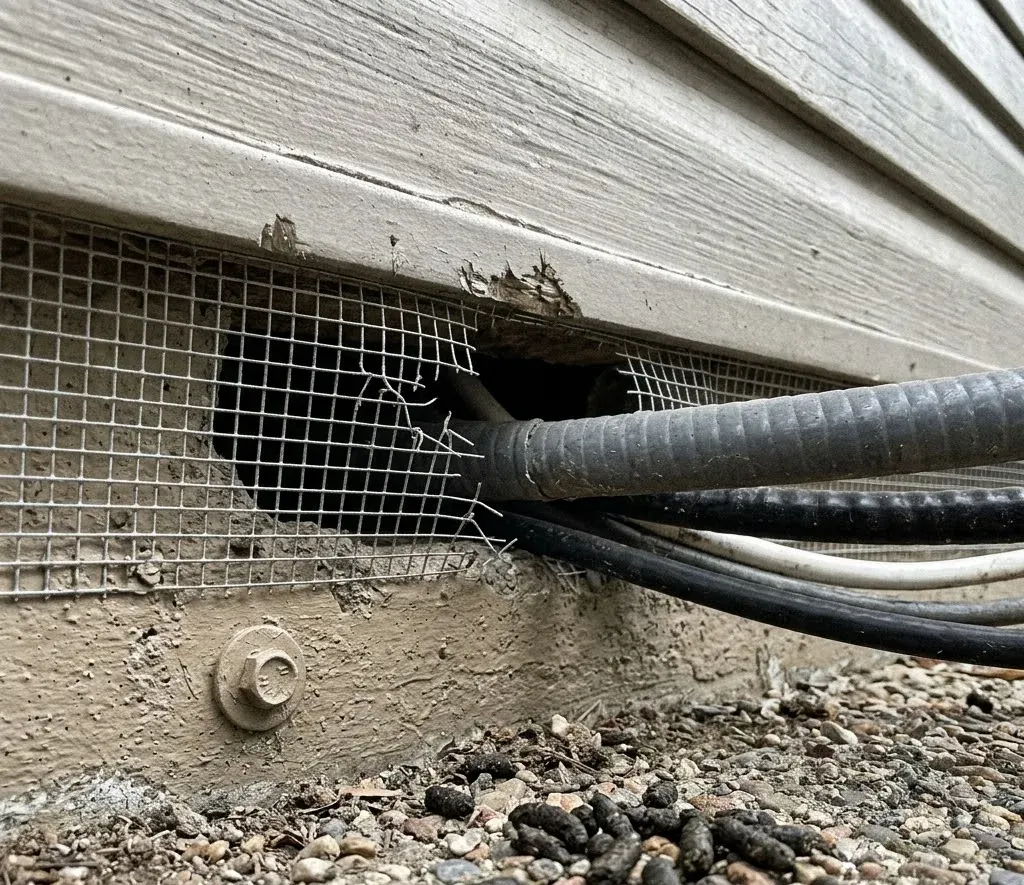
Copper Mesh for Rodent Gaps in South Bend
Learn where copper mesh can fit small rodent gaps, what it leaves unfinished, and when the opening calls for another repair.
Copper mesh can be placed inside a rodent entry gap when the opening’s size and exposure suit the material. In South Bend, check for moisture and contact with nearby materials before choosing it; those conditions may call for a rigid cover or another repair instead.
Where Mesh Can Fit
Copper mesh is a flexible metal filler pressed into a small, uneven opening so rodents have less room to pass. In South Bend, it may suit a narrow gap with edges that make a rigid plug difficult to fit. The weave can be packed into an irregular shape, but it does not create a finished surface on its own. Before choosing it, check the opening’s dimensions and setting; the right filler depends on how much room there is and what will keep the mesh secure.
The strands make copper mesh useful where a small opening has an awkward outline rather than a clean, straight edge. A compact piece can be shaped to match that contour, which can help it stay seated instead of leaving a passage at one side. For homes around Howard Park, the relevant question is the condition of the specific gap, not the neighborhood. If the edges crumble or cannot hold a packed insert, mesh alone may not make a dependable repair.
Copper mesh for mice is a rodent gap filler, not a coating that spreads across a surface. Its open weave occupies space, while the strands resist being easily pushed aside when packed firmly and supported. In South Bend, inspect whether the opening is small enough for this kind of insert and whether you can reach it safely. Consider whether the opening's shape allows the insert to sit fully inside the gap.
Filling Irregular Edges
A packed insert and a completed seal do different jobs. Mesh fills the interior of a small gap, but its woven surface can still leave openings between strands and does not make a smooth outer face. In a South Bend split-level, a repair may need a separate compatible finish to protect the insert and close the exposed surface. Without that finishing step, the filler can remain vulnerable to movement or disturbance, so check the whole repair rather than judging only by how tightly the mesh sits.
Where moisture reaches the opening, consider how often the area stays damp and what the copper will touch. Water and contact with other materials can affect how a repair holds up, so an exposed location needs a material choice suited to those conditions. South Bend’s winter snowfall makes seasonal exposure relevant for gaps near the outside of a home. If the spot gets wet or is difficult to inspect, have the conditions assessed before packing mesh into it.
Copper mesh has strands that can catch skin or snag nearby surfaces while being cut and pressed into place. Wear gloves and keep the work area clear; stop if the gap is hard to reach or the surrounding material is breaking apart. At a South Bend home, a neat-looking insert still needs a secure fit and a suitable finish. If you cannot seat it without force or damage, a different repair may be safer and more durable.
What Mesh Leaves Unsealed
Before selecting copper mesh, note the gap’s width, outline, depth, and exposure. It is most useful when a small opening has an uneven shape that can hold a firmly packed insert. South Bend ranch homes and subdivision lots can have different repair conditions, so use the opening itself to guide the choice. If you cannot tell whether the mesh will stay in place or whether the edges are sound, pause and ask the pros we connect you with to assess it.
Some openings need a firm face or structural support that loose woven filler cannot provide. In that case, a rigid cover or another repair may better match the job, because it can span the opening and resist routine contact. A South Bend property with a damaged or weak surface should be assessed before mesh is packed into it; a filler cannot restore the material around it. Choose the repair based on the opening’s condition and the protection it needs.
When Another Repair Fits Better
Mesh is part of exclusion, so it addresses an access gap rather than confirming whether rodents are still active indoors. If you find fresh signs after the opening is repaired, or activity continues, an inspection can help connect those signs to a route and determine whether control steps need adjustment. South Bend residents near Leeper Park can use the same practical threshold as elsewhere: a single repaired gap does not explain every sign. Stop adding filler and get the conditions assessed when activity persists.
After the repair, look for movement, gaps at the edges, or a finish that has come away; any of these can leave the insert unsupported. Check the area again if signs of rodent activity appear, since follow-up can show whether the repair and other control measures need attention. Around Rum Village Park and elsewhere in South Bend, the pros we connect you with can explain what they will monitor under the service plan. Do not assume mesh alone has resolved continuing activity.
Check the Opening First
- Measure the opening and check its outline; mesh fits best where a small, uneven gap can hold a firmly packed insert.
- Check for dampness and nearby materials that touch the copper, since exposure can affect which filler and finish suit the repair.
- Choose a rigid cover or another repair if the surface is weak or the opening needs a firm, continuous face.
- Use copper mesh for a narrow opening with an uneven edge, where it can be fitted snugly without leaving loose material exposed.
- Treat mesh as a filler, not automatically as the final barrier; the opening may still need a surface layer that suits the surrounding wall.
- Note whether the spot stays damp or touches other materials, since those conditions can change which repair holds up best.
Service Questions
Which small rodent gaps can copper mesh fill?
Copper mesh is used as a packed insert in small, uneven openings where its flexible weave can fit the shape. It can help block passage when the gap is sound and the mesh is held firmly in place. It is not a finished surface, so the repair may need a compatible cover or finish. Check the opening’s size, edges, and exposure first; a weak or wet location may call for another material.
Will copper mesh close an opening without another layer?
No. The mesh occupies space inside a gap, but its woven strands do not form a continuous outer surface. Check for spaces around the insert that could leave part of the opening uncovered. The right finish depends on the surrounding material and whether the area is exposed to moisture or contact. If the edges cannot support the repair, use another approach suited to the opening.
When should I choose a rigid repair over mesh?
Dampness and nearby materials should be considered before using copper mesh. A persistently wet location or contact with other metals and finishes can affect the repair, so assess the setting and select compatible materials. If you cannot tell how the surfaces will interact, pause before installation and ask the pros we connect you with to review the conditions. Mesh is a filler; it does not solve water exposure or a failing surface.
Need help choosing a gap material?
Describe the opening’s width, setting, and exposure to the pros we connect you with to discuss a suitable repair material.
Call (574) 891-1078