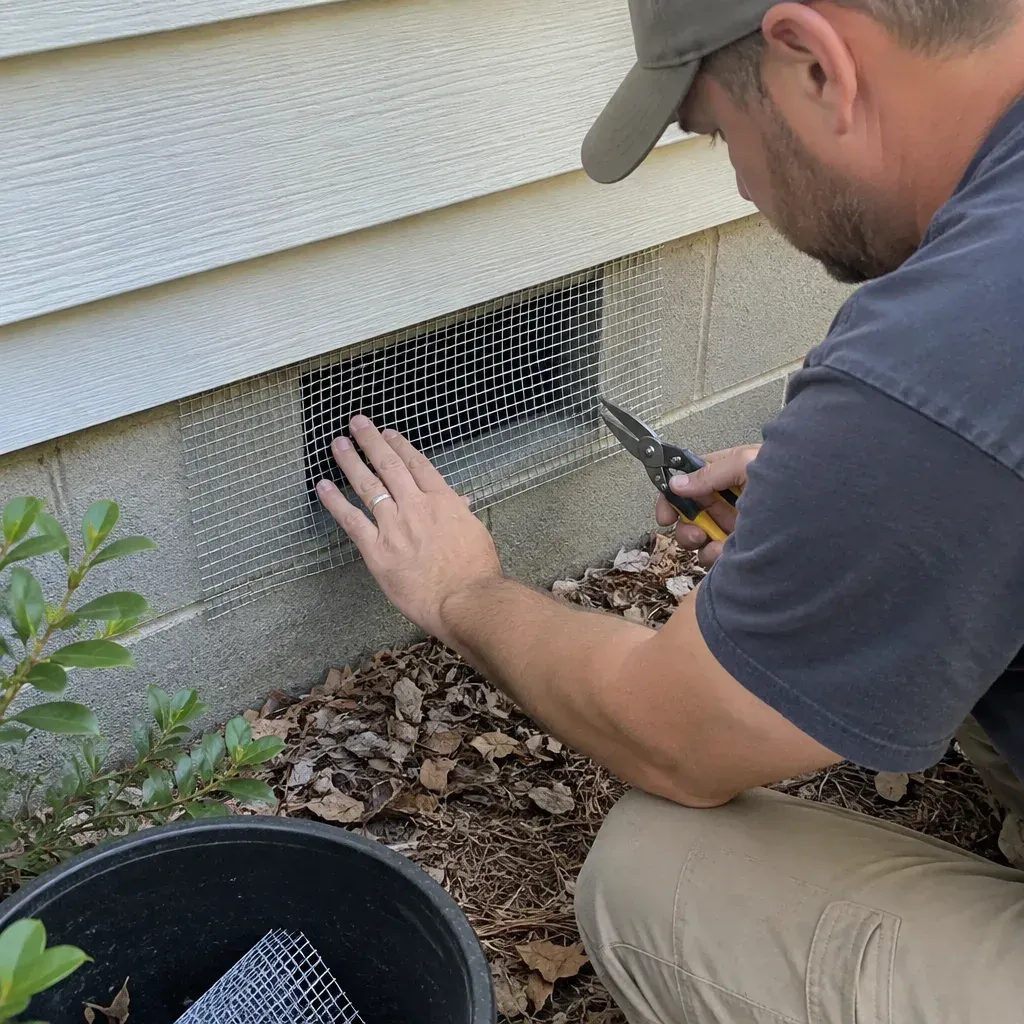
Where Hardware Cloth Can Block Rodents in South Bend
Near Howard Park or Potawatomi Park, hardware cloth can screen larger openings when the cover preserves needed airflow and access.
Hardware cloth can cover a crawlspace access opening or a damaged panel opening when a close-fitting plug is impractical. Measure the opening, choose mesh suited to excluding rats and mice, and secure its perimeter while keeping any needed airflow and access clear.
Openings Suited to Mesh Covers
Hardware cloth is a rigid wire screen that can be cut into panels for openings too broad for a simple fitted plug. In South Bend, it may suit a foundation vent or a larger, unused service opening where rats or mice could pass through. The panel needs to span the opening and meet a surface that can hold its edges. It can reduce access at that spot, but it does not address rodent activity elsewhere or prove that a building is sealed.
Look for openings that are broad and regular enough to accept a panel, such as a basement vent or a large gap around an abandoned exterior utility opening. A ranch or split-level in South Bend may have different foundation layouts, so inspect the actual opening rather than assuming one cover fits every house. If you see fresh droppings or gnaw marks nearby, note where they are. Those signs help you decide whether you are simply checking a cover or should ask for an inspection.
A screen belongs where it can close off an access route while leaving the opening’s purpose intact. For example, a ventilating foundation opening still needs air to pass, and a service opening may need to remain reachable. Homes around Potawatomi Park, like other South Bend properties, vary in construction, so measure each location separately. If a panel would block airflow, drainage, or routine access, stop before fitting it and identify a design that preserves that function.
Choosing Mesh for Rodents
Mesh openings must be small enough to resist the rodents you are trying to exclude, while the wire needs enough strength for the setting. Hardware cloth for mice calls for particular attention to the size of each square; a broad weave can leave a route through the panel. In South Bend, choose the mesh for the opening and its likely exposure, not just by appearance. If you cannot judge whether the weave or wire will hold, a rodent-exclusion provider can assess the site.
The wire’s finish matters where rain, damp masonry, or seasonal weather can wear on it. A material that corrodes or weakens may leave the panel less dependable over time, even if it was secure at first. In South Bend, consider how exposed the location is and whether the cover can be checked without disturbing nearby equipment. The pros we connect you with can explain material choices for a particular opening; the suitable option depends on its conditions and use.
A panel should sit across the opening without bowing, sharp exposed edges, or gaps at its border. Measure the frame at several points if it is uneven, then consider how the screen will meet the surrounding surface. At a South Bend house near Leeper Park, for instance, the same approach applies as anywhere: the actual frame determines the fit. If the edge cannot be secured firmly, a panel alone may leave an entry route, so pause and get the attachment assessed.
Attaching Screens Without Gaps
A cover works only when its edges stay fixed to a surface that can support the fasteners. Loose or crumbling material may not hold a panel, and a gap along one side can defeat the barrier. In South Bend, check the condition of the frame before choosing where fasteners go. Do not cover over evidence of active entry and assume the problem is resolved; if you find fresh signs or cannot tell whether rodents remain inside, contact a provider for an inspection.
Before attaching a screen, check what sits behind or beside the opening. A vent may need seasonal cleaning, and a utility area may require access for inspection or repair. A cover that is difficult to remove can turn routine maintenance into a problem. South Bend homeowners can mark the opening’s dimensions and note these access needs before discussing a fit. If the screen would interfere with equipment or safe access, stop and ask about a cover suited to that use.
Inspecting and Maintaining Covers
A fitted panel still needs occasional inspection. Look for rust, bent wire, shifting fasteners, and signs that the surrounding frame has changed; any of these can create a path through or around the screen. In South Bend, recheck a cover after nearby work or an impact, and when you notice new rodent signs. If activity continues despite an intact-looking panel, the route may be elsewhere. An inspection can help locate the signs and determine whether exclusion or other control steps need attention.
Keep the screened area clear enough to preserve airflow and let you see the panel’s edges. Leaves, stored items, or debris can hide damage or press against the wire, while blocked ventilation may create a separate building concern. Near Rum Village Park or elsewhere in South Bend, the relevant check is the condition and purpose of each opening, not the neighborhood. If you cannot maintain the cover without blocking its function, have the fit reviewed before relying on it.
Check Before Fitting a Cover
- Measure the opening at multiple points and note whether it must remain open for ventilation, drainage, or service access.
- Check the frame and surrounding surface for damage that could prevent fasteners from holding the panel firmly.
- After fitting, look for rust, bent wire, shifted edges, or fresh rodent signs that call for closer inspection.
- Match the mesh opening to the rodent you need to exclude, then confirm the screen still lets a foundation or crawlspace vent serve its purpose.
- Choose sturdy, corrosion-resistant cloth for exposed locations; a cover that bends or deteriorates can leave an opening rodents may use.
- Fasten the screen across its full perimeter and inspect for lifted corners, rust, or damage that could create a new route inside.
Service Questions
Can hardware cloth cover basement or crawlspace vents?
Hardware cloth can cover broad, frameable openings such as foundation vents or larger unused service openings, provided the panel fits securely and keeps the opening’s function. In South Bend, measure the opening and check its edges, airflow, and access needs before fitting a screen. A panel is not a substitute for an inspection when you find fresh droppings, gnaw marks, or continued activity nearby.
What mesh opening can keep mice from squeezing through?
The work depends on the opening’s dimensions, the screen material and weave, and whether the surrounding surface can hold fasteners. A difficult-to-reach location or a frame that needs preparation can add labor. In South Bend, ask for the opening and attachment method to be assessed together, since a panel that fits but cannot be secured will not close the route reliably.
How can I tell if a hardware cloth cover needs repair?
Call a rodent-control provider when you find fresh signs, hear continued activity, or cannot identify how rodents are getting in. In South Bend, hardware cloth may address a suitable large opening, but it cannot show whether rodents remain inside or whether another route is open. The pros we connect you with can inspect the signs and discuss whether a screen or other control steps fit the findings.
Measure the Opening Before You Fit
Inspect the mesh for tears or worn spots, since damage there can affect how well a screen protects the opening.
Call (574) 891-1078